
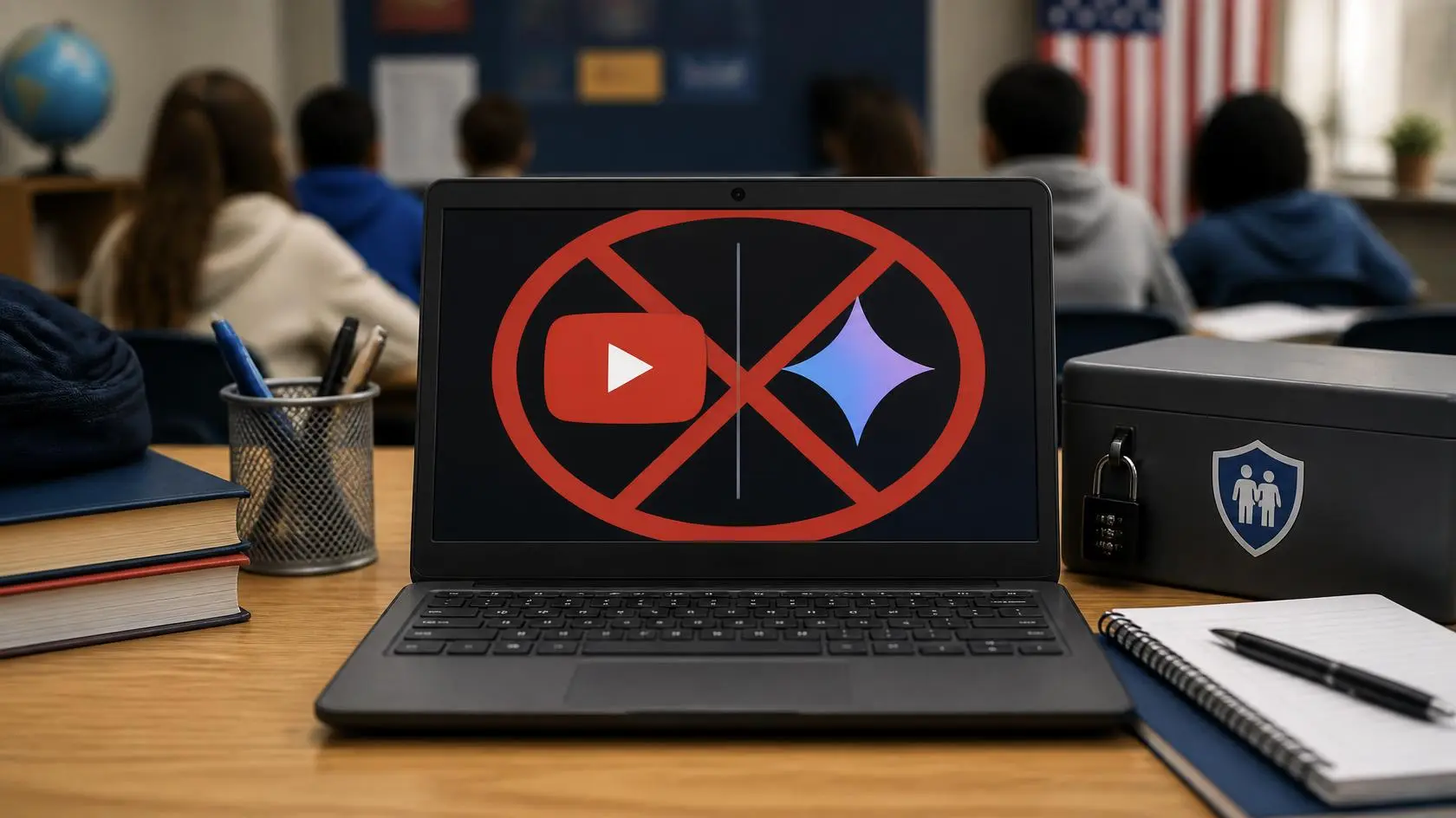
Thirteen educational organizations and experts sent an open letter to the nation’s 150 largest school districts on Monday, urging them to immediately disable YouTube and Google’s Gemini AI on school-issued devices. The groups cite mounting evidence of harm to students and shifting legal liability toward schools themselves.
The move comes as over 1,000 school districts have already sued YouTube for allegedly addicting and harming their students. Yet despite the litigation, many of those same districts continue to enable YouTube access on devices in classrooms and labs.
Google’s Gemini AI presents a separate concern. The company rolled out the chatbot to school-issued devices without seeking permission from schools or parents. Common Sense Media evaluated the tool and rated Gemini K-12 as “high risk,” finding that it “surfaces inappropriate content, poses mental health risks, and has poor boundaries.”
The safety groups argue that Google has deliberately structured its liability to insulate itself from responsibility when products cause harm. The company relies on Section 230 of the Communications Decency Act, a legal shield that protects online platforms from liability for user-generated content, to argue it bears no responsibility when students are harmed by its products on school devices. That leaves school districts holding the legal and financial risk.
“For years, large tech companies have pushed their products into classrooms, seeking to capture our children’s attention. When students have allegedly been harmed by those products, the same companies claim they cannot be held legally responsible. Instead, they blame school districts,” said Keena McAvoy, co-founder of DMV Unplugged, which helped organize the letter.
Liza Schalch, co-founder of DMV Unplugged, added: “We hope that by highlighting the safety and legal risks of these products to students and school districts, we will empower the districts to act quickly to protect students and the districts themselves.”
The 150 districts targeted by the letter serve over 12 million students combined, giving the effort broad reach. Because the letter is being released publicly, it can be shared with any school district in the country.
The signatories include major education advocacy organizations such as Fairplay and Protect Young Eyes, along with smaller specialists like the Screentime Consultant and research groups focused on technology’s impact on childhood. The full coalition spans child welfare, digital literacy, and school policy experts.
The open letter is available at openlettertoschools.com.