Performance Drone Works, a defense technology company headquartered in Huntsville, Alabama, said it will integrate Booz Allen’s new mission autonomy software and its secure fleet update product on its AM drones. The autonomy software is powered by Shield AI’s Hivemind.
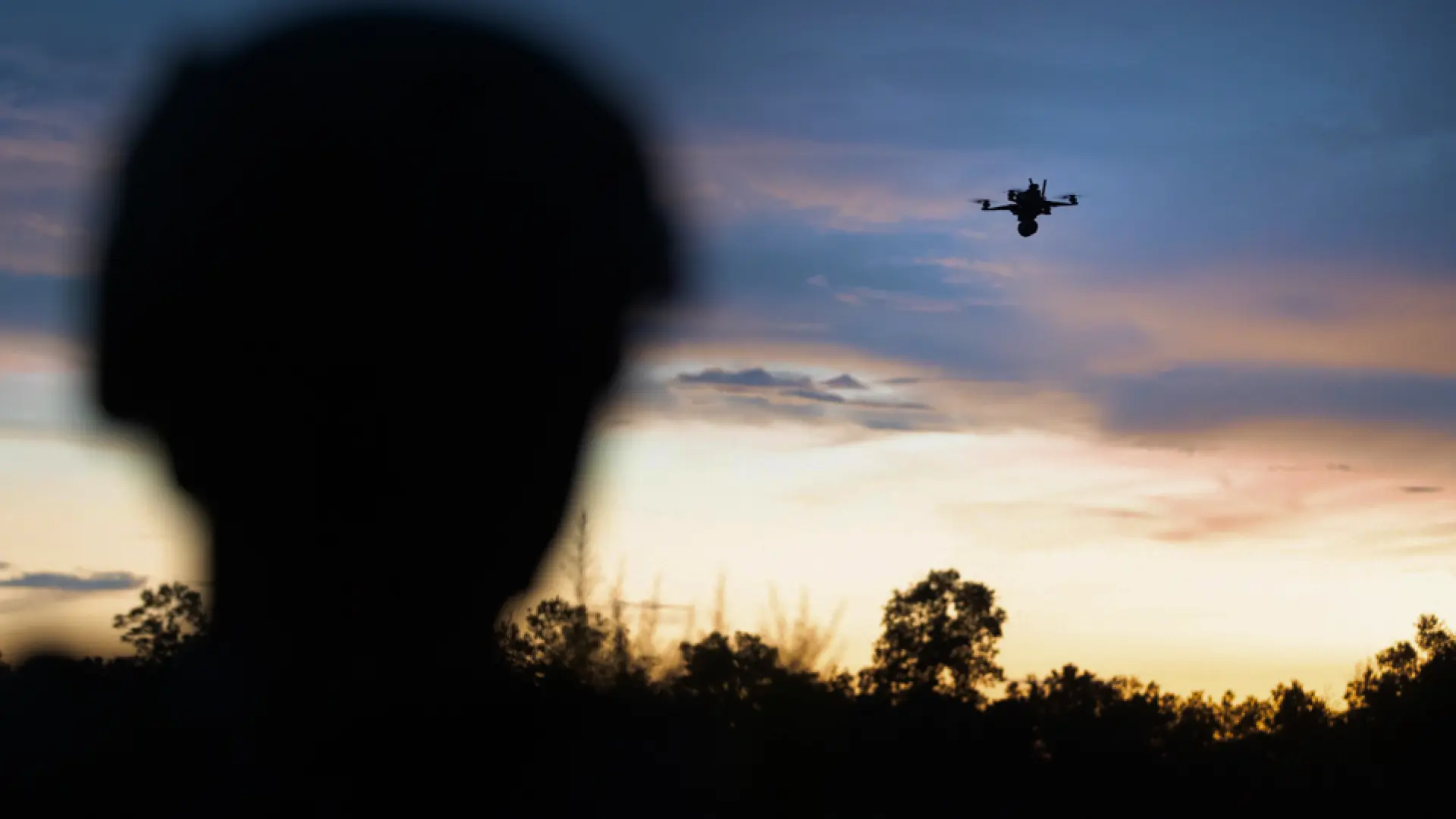
AM is PDW’s multi-mission Group 1 unmanned aircraft system. The company says it can be recovered and reused for intelligence, surveillance and reconnaissance, or for payload delivery, and then configured for attritable strike when needed. Attritable generally means a system built to be affordable enough to lose. Customers can fly AM in its base configuration or add Booz Allen’s software, which the company says enables autonomy-assisted perception and operator-authorized effects delivery within a single mission workflow.
The autonomy software is designed to let operators carry out parts of a mission with less manual control while they keep decision-making authority. Booz Allen says it reduces cognitive burden so operators can make faster, informed decisions. The fleet update product is a separate piece. It gives authorized teams one control point for deploying software, managing configurations and monitoring aircraft across a fleet, and it is built to keep deployments intact when connectivity is disrupted or limited. PDW says the product can cut approved update cycles from weeks or months to hours.
PDW’s James Slider, the company’s chief executive, tied the partnership to speed of fielding:
“The advantage will belong to the force that can field, adapt, and scale unmanned and autonomous systems fastest,” said James Slider, CEO of PDW. “Through our work with Booz Allen, operators gain advanced autonomy at the point of decision and a faster path to updated fielded aircraft as missions change, backed by U.S. capacity to produce and sustain their aircraft at scale. Warfighters should not have to stand by for airpower or be limited by a static capability outpaced by modern conflict.”
Booz Allen’s autonomy lead, Randy Yamada, a vice president within the firm’s defense technology business, made the case from the software side:
“The Department of War needs autonomy that works at the pace of the mission,” said Randy Yamada, a vice president and autonomy lead within Booz Allen’s defense technology business. “Booz Allen’s autonomy software gives unmanned aircraft onboard mission behaviors that help reduce operator burden and keep teams focused on mission outcomes, while our fleet update manager provides the secure software delivery and lifecycle management needed to update and verify those capabilities across a distributed fleet, even in contested, disconnected environments. Together, they operationalize these capable platforms that can evolve as the threat does.”
The company’s Drone Factory 01 is a 90,000-square-foot facility in Huntsville with an annual production capacity of 100,000 drones.
The combined hardware and software product entered controlled testing on September 30, 2026, and is planned for general availability in the first quarter of 2027. PDW and Booz Allen also plan to develop additional autonomous software options and extend the mission autonomy software to the C100 in 2027. The performance figures in the announcement are the companies’ own descriptions.